

Data Governance
Florida A&M University’s data governance framework spans all academic and administrative
units, ensuring that institutional data is effectively managed to support the University’s
mission, strategic priorities, and compliance obligations. The University President is responsible for all data assets and assigns Executive
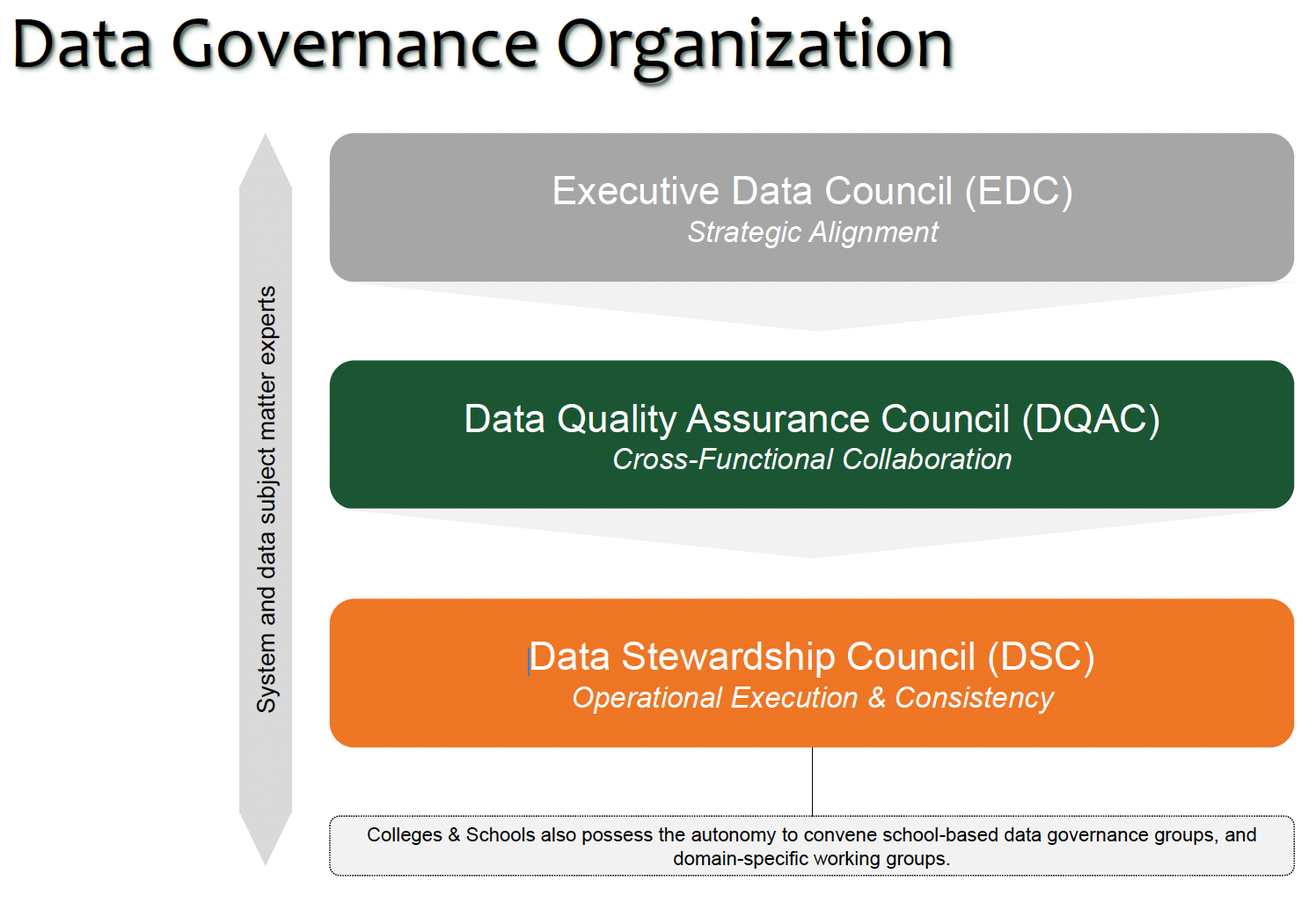
Data Council (EDC) members to oversee the ten key data areas. The Executive Data Council (EDC) provides overall direction for institutional data,
with governance activities coordinated through a structured model that includes the
EDC, the Data Quality Assurance Council (DQAC), and the Data Stewardship Council (DSC),
and appoints Data Stewards who focus on the daily management and use of data.
Within this framework, data ownership and oversight are distributed across functional
areas. Data stewards are designated across key institutional domains and are responsible
for the day-to-day management, quality, and appropriate use of data within their respective
areas. These stewards collaborate through governance councils and domain-specific
working groups to support consistent data practices and informed decision-making across
the University.
Key responsibilities within FAMU’s data governance framework include:
- Defining and maintaining data governance roles and responsibilities as outlined in University policy and supporting procedures;
- Providing oversight of the data governance structure to ensure that policies, standards, and documentation are consistently developed, maintained, and accessible to the University community;
- Supporting and participating in governance bodies, including the EDC, DQAC, DSC, and related working groups;
- Ensuring that appropriate data security and cybersecurity controls are implemented and aligned with institutional and regulatory requirements; and
- Collaborating with functional and technical stakeholders to promote effective data management, data quality, and the continuous improvement of governance practices.