


Great Things
FAMU Expands Research Impact Through Innovative School-Based Partnership Model
March 26, 2026 | By Heather Johnson
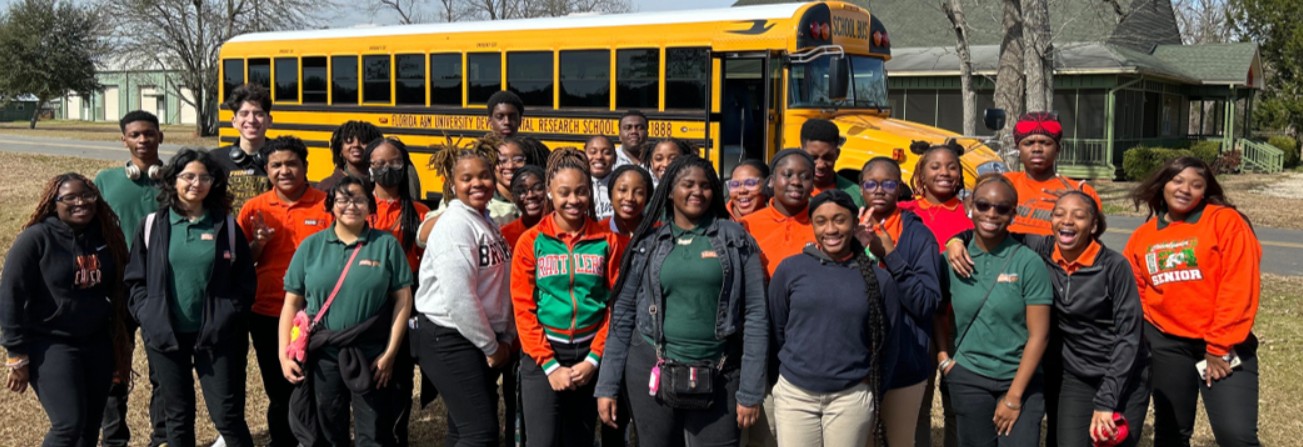
Tallahassee, Fla.—Florida A&M University (FAMU) is strengthening its position as a national leader in community-engaged research through the FAMU² Research–Practice Partnership Hub (FRAP), an initiative designed to connect faculty research directly to K-12 classroom practice and improve student outcomes.
Collaborative Research Projects Support Classroom Innovation at FAMU DRS
Through the initiative, University faculty, educators and students collaborate to co-design and implement research projects that address real-world challenges in teaching and learning. The model positions FAMU at the forefront of integrating research and practice, while creating immediate, measurable benefits for students and teachers at Florida A&M University Developmental Research School (FAMU DRS).
“This initiative reflects FAMU’s commitment to aligning research, innovation and student success across the educational continuum,” said Gail Randolph, DPT. “By embedding faculty-led research within classroom environments, we are accelerating the application of evidence-based strategies and reinforcing our role as a national leader in advancing educational equity and outcomes.”
FAMU Provost Allyson Watson, Ph.D., agreed and said the initiative also represents a strategic investment in connecting academic search to real-world impact.
“The FRAP project exemplifies how we are leveraging the full strength of the University to drive meaningful change in education,” Watson said. “By intentionally linking faculty scholarship with classroom practice, we are enhancing the student experience and generating knowledge that informs teaching and learning across the broader educational enterprise.”
As part of the pilot phase, nine faculty-led action research projects have been launched through the FAMU² Faculty Research Award Program. These projects focus on key priorities such as early literacy, math achievement, STEM engagement, college readiness, and family involvement, directly supporting the academic success of students at FAMU DRS while generating insights that can be scaled more broadly.
Yolanda Foxx-Palmer, STEM program coordinator for FAMU DRS, said the partnership enhances instructional practice while strengthening its connection to the University’s research mission.
“FAMU DRS benefits in powerful ways from this collaboration by gaining direct access to faculty expertise, research-based strategies, and innovative approaches tailored to our students,” she offered. “This partnership ensures our classrooms remain dynamic, responsive and aligned with the highest standards of teaching and learning.”
Youth-Led Research Expands Student Engagement and College Readiness
The initiative also creates opportunities for students to engage in Youth-Led Participatory Action Research, allowing them to contribute to identifying challenges, analyzing data and shaping solutions. This experience strengthens critical thinking and problem-solving skills while reinforcing college and career readiness for FAMU DRS students.
Supported by faculty research awards of up to $5,000, the program enables FAMU’s researchers and educators to pilot new instructional strategies, evaluate their effectiveness and expand successful approaches. These efforts not only enhance teaching and learning at FAMU DRS but also contribute to a broader body of knowledge that informs educational practice beyond the university.
“This work strengthens the University’s ability to translate research into practice in ways that positively impact student success,” Randolph said. “It underscores FAMU’s role in developing solutions that are both academically rigorous and deeply connected to the communities we serve.”
Supported by an Institutional Challenge Grant from the William T. Grant, Doris Duke and Spencer Foundations, the FAMU² initiative further positions the University as a national model for research-practice partnerships that drive innovation, equity and measurable impact in education.
FRAP is an official initiative of the Provost Professor for Community Outreach, Engagement and Research, an honorific designation for a tenured or full professor who serves as a chief liaison and strategist to the provost. The role supports the development of collaborative partnerships with university leaders to advance initiatives that connect faculty research, community engagement, and student success priorities across the local education landscape.